
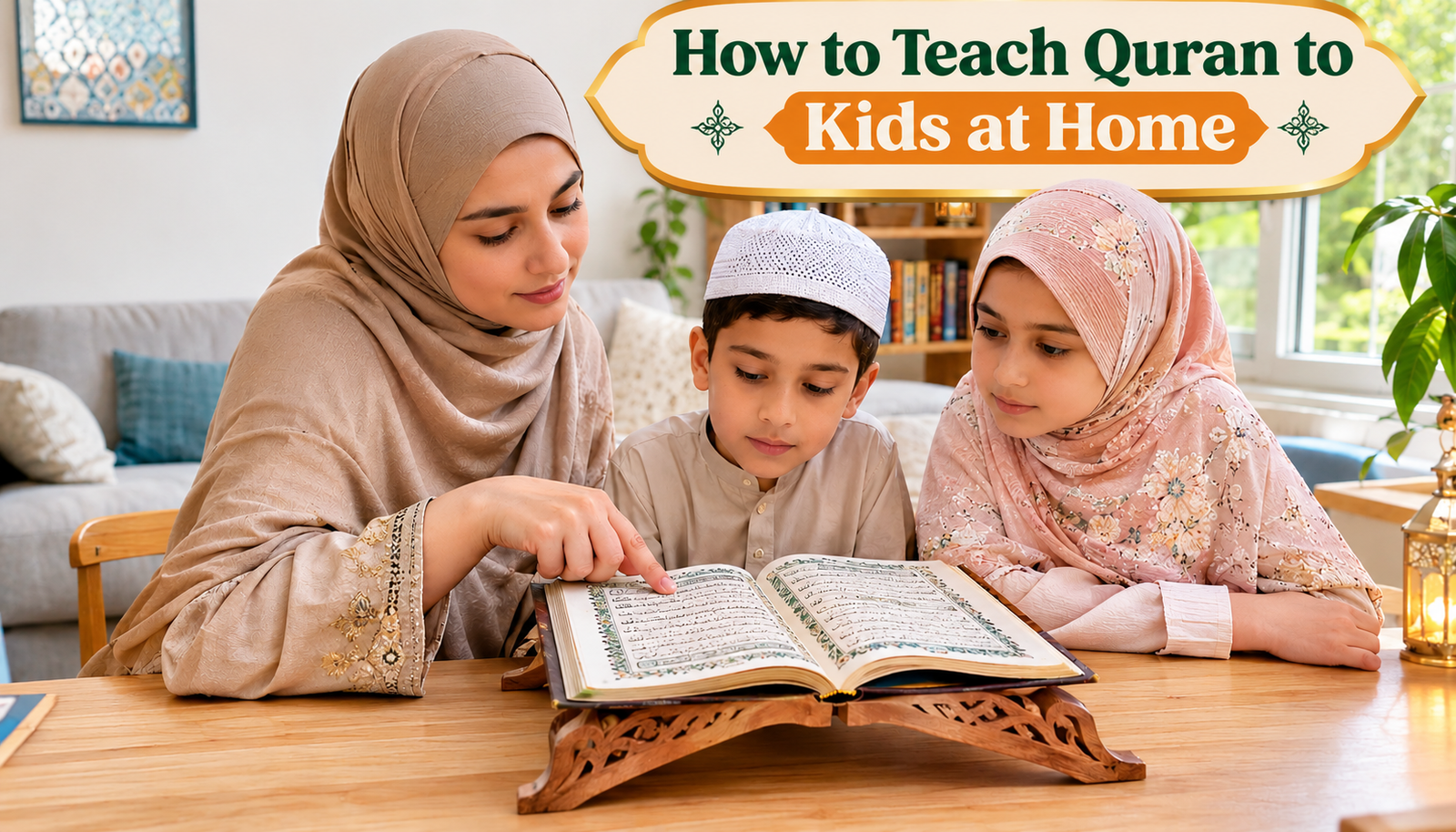

Teaching the Quran to children at home is something many Muslim parents want to do. But getting started isn’t always easy. Some children struggle to recognize Arabic letters, while others lose interest after just a few minutes. Parents may also worry about their own Tajweed skills or finding enough time for daily lessons.
The good news is that you don’t need to be an expert to help your child begin learning the Quran. A simple routine, the right learning materials, and a little patience can make a real difference.
To teach Quran to kids at home, start with Arabic letters, use Noorani Qaida for basic reading, practice short Surahs, and create a consistent daily learning routine. Keep lessons short, make activities enjoyable, and focus on correct pronunciation rather than rushing through chapters.
Here are ten practical ways to help your child develop Quran reading skills and build a lasting connection with the Holy Quran.
1. Introduce the Quran at an Early Age
Children learn many things by watching and listening to their parents. Quran learning can begin in a similar way.
You don’t have to wait until your child can read Arabic. Even toddlers can become familiar with Quran recitation by listening to it at home.
For example, you can play a gentle recitation of Surah Al-Fatihah while spending time together. Older children can gradually begin repeating short verses.
When your child becomes interested in letters, introduce the Arabic alphabet through pictures, flashcards, and simple activities.
Some children are ready for structured lessons at four or five years old. Others may need more time. There is no need to rush.
The important thing is to make the Quran a familiar and positive part of your child’s daily life.
2. Start With the Arabic Alphabet
Before children can read the Quran independently, they need to recognize Arabic letters and understand how they sound.
Begin with a few letters rather than introducing the entire alphabet in one lesson.
For example, teach Alif, Ba, and Ta on the first day. Show each letter, say its name, and encourage your child to repeat it.
The next day, review those letters before adding new ones.
You can also write the letters on cards and ask your child to identify them.
Once your child recognizes individual letters, introduce their different shapes when joined with other letters.
Pay attention to pronunciation. Some Arabic letters have sounds that don’t exist in English, so children may need extra practice.
If you aren’t confident about the correct sounds, use reliable recitations or ask a qualified Quran teacher for guidance.
3. Use Noorani Qaida for Step-by-Step Learning
Noorani Qaida is a popular beginner’s book for learning how to read Arabic, especially for Quran recitation.
It introduces essential reading concepts in a structured order, helping children move from recognizing individual letters to reading complete words.
Children typically learn:
- Arabic letters and their different forms
- Harakat, including Fatha, Kasra, and Damma
- Joining Arabic letters
- Sukoon and Shaddah
- Basic pronunciation and reading exercises
Start with the first lesson and move forward only when your child understands the material.
For example, if your child struggles to distinguish similar-looking letters, spend another day reviewing them.
Finishing Noorani Qaida quickly shouldn’t be the goal. Learning the basics correctly is much more important.
4. Create a Daily Quran Learning Routine
Children often respond well to familiar routines. When Quran learning happens at a regular time, it can become a natural part of their day.
You don’t need to schedule long lessons for young beginners.
Start with 10 to 15 minutes and increase the duration gradually if your child is comfortable.
Here’s a simple routine you can try:
| Activity | Duration |
| Review the previous lesson | 3 minutes |
| Practice new Arabic letters or words | 5 minutes |
| Listen to a short Quran recitation | 3 minutes |
| Practice a short Surah | 4 minutes |
You might choose a quiet time after school or after Maghrib prayer.
Try to avoid scheduling lessons when your child is tired, hungry, or distracted.
If your child finds it difficult to concentrate for 15 minutes, divide the lesson into two shorter sessions.
A consistent five-minute lesson is often more useful than a longer lesson that regularly ends in frustration.
5. Teach Short Surahs Through Repetition
Memorizing short Surahs is a meaningful way to introduce children to Quran recitation.
Many parents begin with Surahs from Juz Amma because they contain short passages that are manageable for beginners.
You can start with Surah Al-Ikhlas, Surah Al-Falaq, Surah An-Nas, or Surah Al-Kawthar.
Choose one Surah and divide it into small sections.
First, play a clear recitation of the opening verse. Ask your child to listen carefully.
Next, repeat the verse slowly and encourage your child to recite it.
Practice until your child feels confident before moving to the next verse.
Once the entire Surah has been learned, revise it regularly.
Don’t focus only on memorizing quickly. Help your child pronounce the words correctly and remember them over time.
6. Make Quran Lessons Interactive
Not every Quran lesson needs to involve sitting with a book.
Young children enjoy activities, and you can use that interest to support their learning.
Try Arabic letter matching games, flashcards, or simple quizzes.
For example, place five Arabic letter cards on a table. Say the name of one letter and ask your child to find it.
You can also create a Quran learning chart.
Whenever your child completes a lesson or remembers a previously difficult letter, add a star to the chart.
These small activities can help children stay interested.
Just remember to keep the activities connected to the lesson. The goal is to make learning easier, not distract from it.
7. Introduce Tajweed in a Simple Way
Tajweed is the set of rules that guides correct Quran recitation.
Children don’t need to memorize every Tajweed rule at the beginning. However, learning accurate pronunciation early can help them avoid developing incorrect reading habits.
Start with the sounds of individual Arabic letters.
As your child progresses, introduce basic concepts such as Madd, Ghunnah, and the correct articulation points of letters.
Use examples rather than lengthy technical explanations.
For instance, when teaching Madd, demonstrate how a sound is lengthened in a particular word.
Let your child listen and repeat.
If you’re unsure about a rule, avoid teaching it from memory alone. A qualified teacher can demonstrate the correct recitation and help your child practice.
8. Help Children Understand What They Recite
Quran learning becomes more meaningful when children begin understanding the message behind the verses.
You don’t need to introduce detailed Tafseer to a young beginner.
Instead, explain simple meanings in language your child understands.
For example, while teaching Surah Al-Ikhlas, explain that Allah is One.
When learning Surah Al-Fatihah, talk about praising Allah and asking Him for guidance.
You can also discuss Quranic values through everyday examples.
If your child helps someone at home, use the opportunity to talk about kindness.
If they tell the truth in a difficult situation, explain why honesty is important in Islam.
These conversations help children connect Quran learning with their daily behavior.
9. Be Patient and Celebrate Small Improvements
Every child has a different learning pace.
Some children learn new Arabic letters quickly. Others need several lessons to remember the same sounds.
Comparing your child’s progress with other children can make learning stressful.
Instead, focus on what your child has achieved.
If your child recognizes a letter that was difficult yesterday, appreciate that improvement.
If they make a mistake, correct it gently.
You can say, “Good try! Let’s read that word together once more.”
Avoid turning every lesson into a test.
Children are more likely to participate willingly when they feel supported and comfortable.
Remember that learning the Quran is a long-term journey. A positive attitude toward learning matters just as much as completing individual lessons.
10. Know When Your Child Needs a Quran Teacher
Parents can play an important role in teaching Quran at home, but they don’t have to manage everything themselves.
Some children need extra help with Arabic pronunciation, Tajweed, or reading fluency.
Others may respond better to structured lessons with a teacher.
If your child repeatedly struggles with certain sounds or reading exercises, professional guidance may help.
For families looking for additional support, educational providers such as International Quran Academy offer online Quran learning options that children can access from home.
A qualified teacher can identify reading mistakes, introduce lessons in a suitable order, and provide individual feedback.
Parents can then support the learning process through short revision sessions between classes.
The combination of teacher guidance and regular home practice can provide a more structured learning experience.
Common Mistakes to Avoid When Teaching Quran at Home
Parents naturally want their children to make progress. However, certain habits can make Quran learning more difficult.
Teaching too much in one lesson: Young children may struggle to remember large amounts of new material. Introduce smaller portions and revise them regularly.
Skipping basic Arabic reading: Moving directly to Quran reading before learning the alphabet can create unnecessary difficulties for beginners.
Ignoring pronunciation: Children may repeat incorrect sounds if mistakes aren’t corrected early.
Forgetting revision: Learning new verses without reviewing previous ones can make memorization harder to maintain.
Using pressure or punishment: Harsh criticism may discourage children from participating. Patient guidance is generally a better approach.
Expecting every child to learn at the same speed: Adjust the lesson according to your child’s needs rather than following a rigid timetable.
Avoiding these mistakes can help make Quran learning more comfortable and productive.
Frequently Asked Questions
What is the easiest way to teach Quran to kids at home?
Start with Arabic alphabet recognition, introduce Noorani Qaida, and practice short Surahs through listening and repetition. Use short daily lessons and revise previous material before introducing something new.
At what age should children start learning the Quran?
Children can listen to Quran recitation from an early age. Structured lessons often begin around four to six years old, depending on the child’s interest, readiness, and ability to concentrate.
How long should a child’s daily Quran lesson be?
Ten to fifteen minutes can be a practical starting point for young beginners. Older children may be comfortable with longer lessons. The duration should depend on their age, attention span, and learning progress.
Can parents teach Quran without knowing Arabic?
Parents can help children listen to recitations, recognize letters, and develop regular learning habits. However, correct Quran pronunciation requires reliable guidance. A qualified teacher is helpful when parents are unfamiliar with Arabic reading or Tajweed.
Should children learn Noorani Qaida before reading the Quran?
For children who are unfamiliar with Arabic letters, Noorani Qaida provides a structured foundation. It helps them learn letters, vowel marks, and basic reading skills before moving to complete Quranic verses.
How can I motivate my child to learn Quran every day?
Keep lessons short, use interactive activities, appreciate small improvements, and choose a comfortable study time. Avoid comparisons and unnecessary pressure. Consistency and encouragement can help children develop a positive learning routine.
Final Thoughts
Teaching Quran to kids at home doesn’t have to be difficult. What matters most is creating a supportive environment where children can learn at their own pace.
Begin with the Arabic alphabet, introduce Noorani Qaida, practice short Surahs, and make revision part of your daily routine.
Use simple activities to keep children interested and explain the meanings of verses in an age-appropriate way.
Most importantly, be patient.
Some days your child may learn several new letters. On other days, simply reviewing an old lesson may be enough.
With regular practice, encouragement, and appropriate guidance, parents can help their children develop Quran reading skills and a meaningful connection with the Holy Quran.

Put correct shortname from your Disqus account in Customizer settings.